
It does not matter how slowly you go as long as you do not stop. – Confucius
While I was drafting my post on Marcus Aurelius’ Meditations, I thought about another philosopher whose teachings followed me through school and into adulthood: Confucius (孔夫子). Both believed in self discipline and cultivating character to achieve moral goodness. The difference is that Marcus Aurelius focused on mastering the self, while Confucius looked at social order and harmony.
About Confucius
Confucius was China’s most celebrated teacher, philosopher, and political theorist. His ideas influenced the civilisations of China and much of East Asia, and if you grew up in Southeast Asia, his teachings were most likely rooted in your early education, as it did for me.
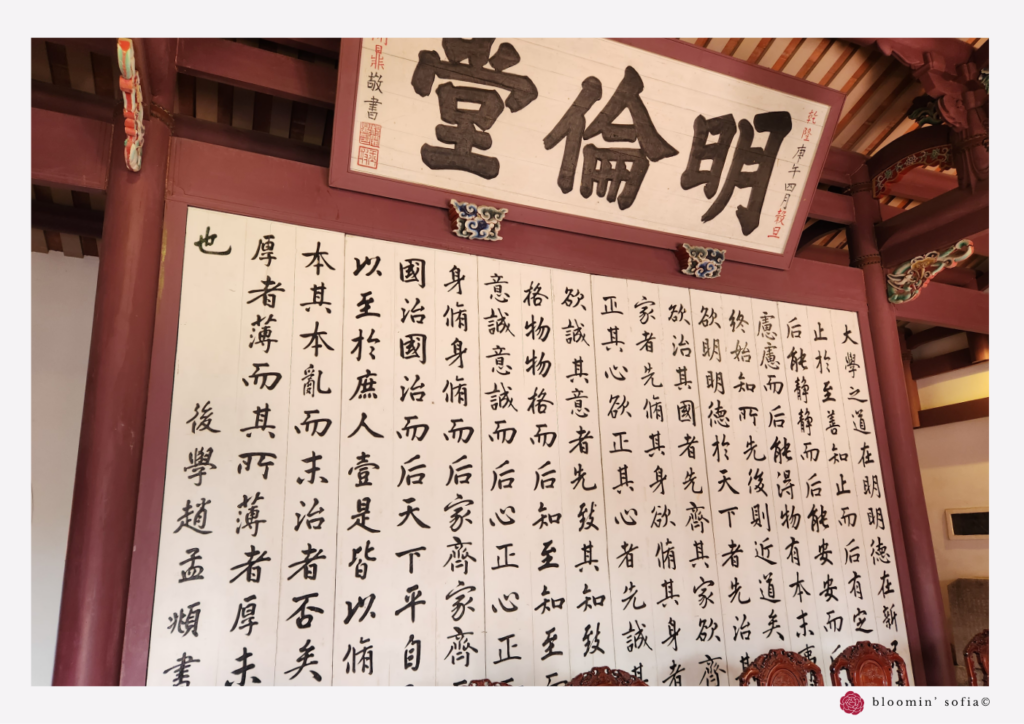
His teachings centred on filial piety and five constant virtues for moral self-cultivation: Ren 仁 (benevolence), Yi 義 (righteousness), Li 禮 (propriety), Zhi 智 (wisdom), and Xin 信 (trustworthiness). His thoughts on ethics and moral character were recorded by his disciples in several texts, the most important being the Lunyu (論語), which I had once studied when I was much younger.
One edifying teaching of Confucianism is essentially the same principle we find across most moral traditions: do not do to others what you would not want done to yourself.
Confucianism is, at its core, a moral and ethical philosophy. But there are those who have worshipped Confucius as a religious figure too.
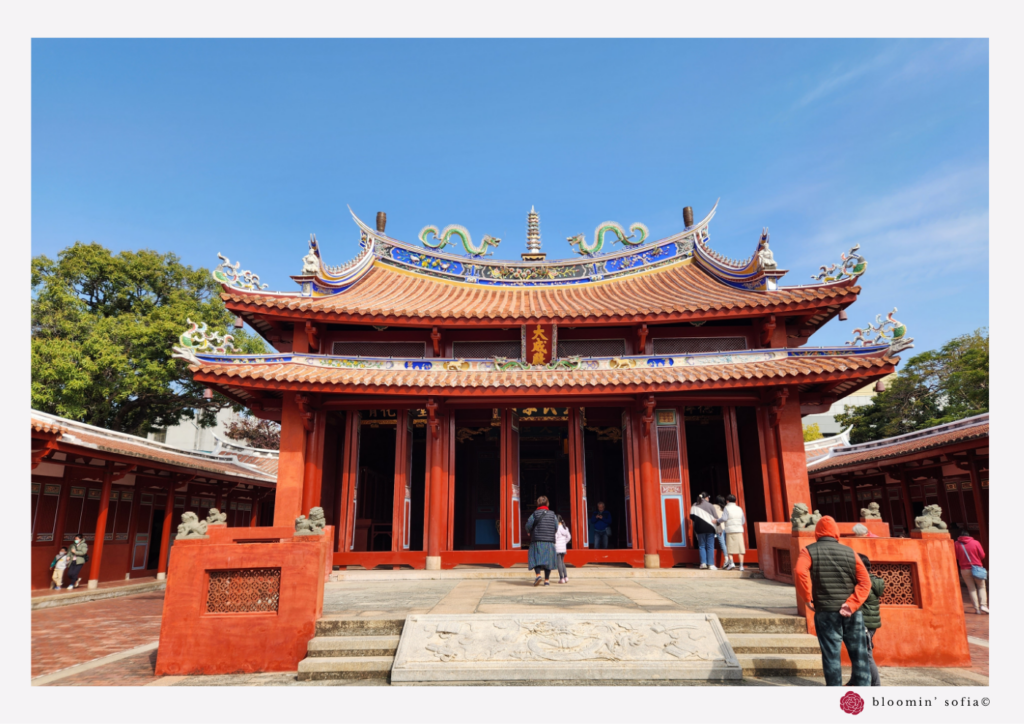
The First Confucius Temple in Taiwan
When I was staying in Taiwan, I visited the Confucius Temple in Tainan, the oldest in the country. It was built in 1666, before the end of the Manchu Dynasty. The temple has been reconstructed over the centuries, but it still carries a quiet, austere elegance signifying what it represents. The place is also known as the First Academy of Taiwan, as it once functioned as a centre for Confucian learning and education.
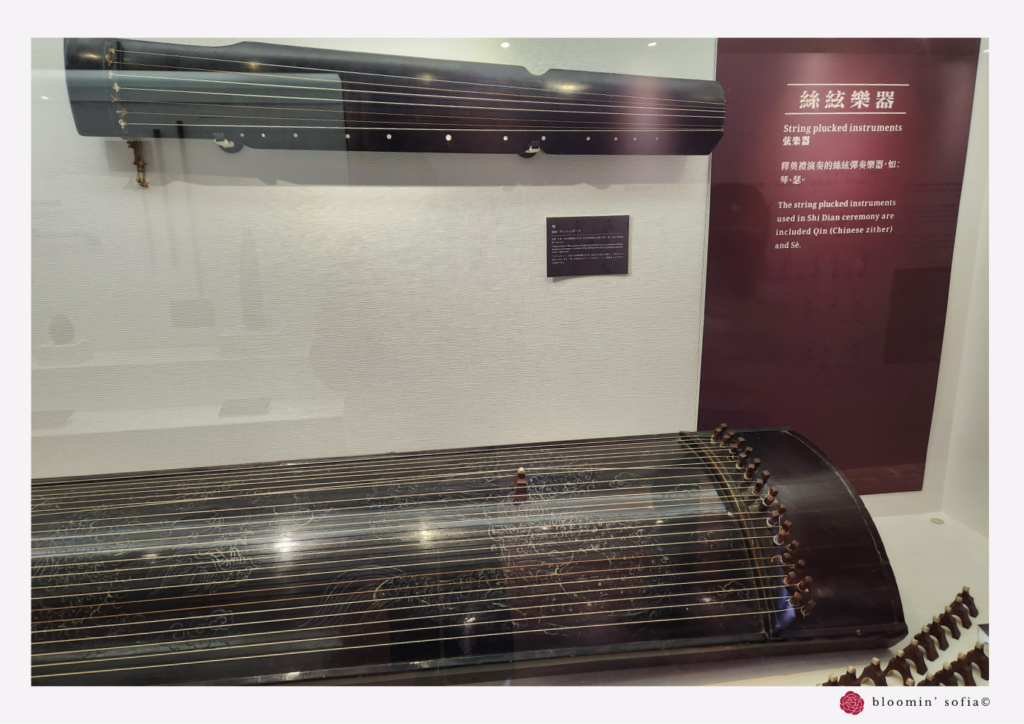
Musical instruments from the early Manchu Dynasty are still kept and preserved here, which is remarkable and brought back nostalgic memories of my Chinese Orchestra childhood.
Thoughts
Overall, the visit had given me an insight into the meritorious values of Confucianism. Rather a religious place, it felt more like a museum housing ancient wisdom and artefact. The ambience was rather pleasant too, and hopefully, I had grown a teeny bit more wits and intellect here. Now, I could see why people visit this place before examinations to make a quiet prayer.
While this is may not be a fancy tourist site, the temple is a quiet and dignified cultural gem best appreciated at a slower place. Today, the temple still preserves ancient Confucian ceremonies, so if you are drawn to history, traditional architecture, or culture, it is a meaningful place you should stop by.
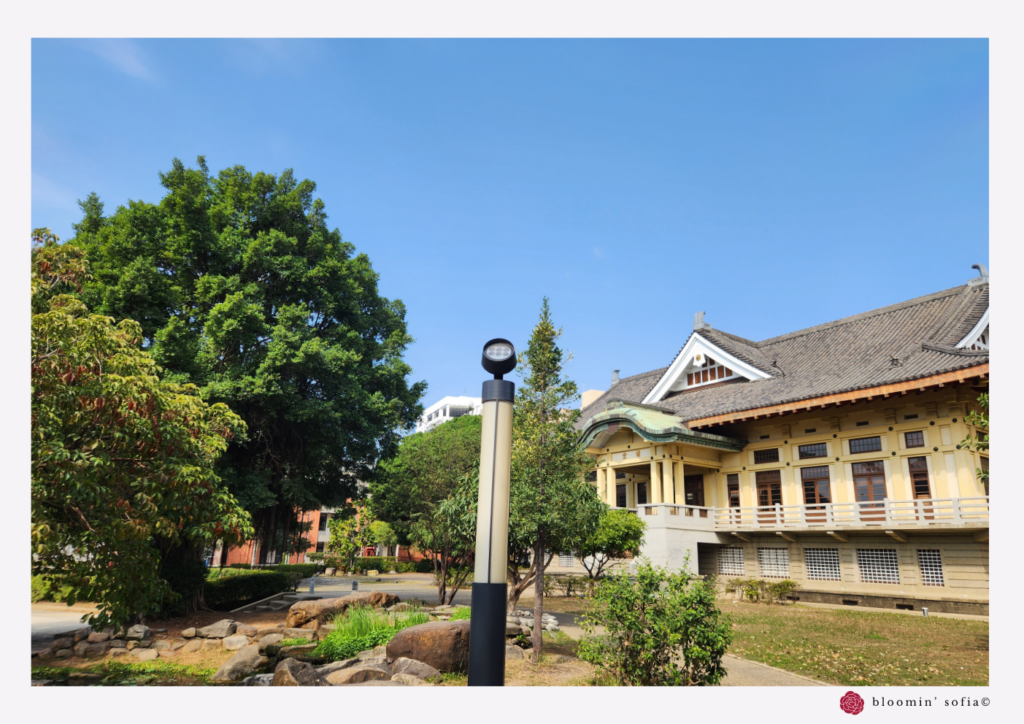
More Information: Tainan Confucius Temple
Address: 明倫堂 台南孔廟文化園區
Opening Hours: 8:30am to 5:30pm.
Note: The outer area is free to enter while the inner compound with the temple palace costs NT$40* price is not updated as of 2026.



Leave A Reply